Monday, August 20, 2012

Attack of the B-Boats!


Let's see if I keep you on board for this one.

First, a little background:
As a child (we're talking 5 and under) I was afraid to death of floaties in the bathtub. These floaties could have been anything: but were usually bit of dirt, or a dead ant from my outside adventures (usually not feces, but how can you not just assume so when I say "bathtub floaties"). I think I was afraid that these UFO (unidentified floating objects) were going to sting or bite me, and cause me pain that I wanted to avoid at all costs. I would often make my dad or brother get a cup and scoop the offender out of the tub. The floaties became known as b-boats (beboats, bee-boats; I've never really had to spell it out).

Wednesday, August 15, 2012

Are you Metal: Part 2

Me, being rather un-Metal
There's this genre of music that the youngsters seem to have embraced in the past couple of years called Dubstep.  Yes, I'm keenly aware that you can trace the origins of this genre to the late 90s - but that doesn't make it any better.  You may have guessed that I'm no fan of the genre as a whole, but that's how I treat most genres aside from the untouchable Jazz.  What troubles me most is the somewhat understandable comparison some people make between Dubstep and Heavy Metal.

Sure, they can both be pretty heavy at times and make nods to subjects on the fringe of society - but is that enough to make the comparison.  To put it bluntly, no.  To put it obscenely no fucking way in hell.


Tuesday, August 14, 2012

A call from the Nation (of Islam)

How my wife and I actually looked in 2008
I just want to emphasize that I understand the following is the exception to the rule.  This is an indictment of no one, except the parties directly involved.

In 2008, my wife Michelle and I had just celebrated our third dating anniversary.  That very same night, I got a random phone call that was quite a treat.  The following is my official account of that phone call; the names have been made-up to protect the derps.

________________________________


If I told you that my girlfriend was a defacto prostitute, you might become confused, and wonder why she's still with me if I were to refer to her in such a manner. This is a relatively new phenomenon in our relationship, because until just recently I was kept in the apparent dark regarding her shadowy nature.

Friday, August 10, 2012

Episodic Music: The Great Red Eye Part VII

The Terrible Looming Procellea


As the chatter from his post-release procedures faded into the background of his subconsciousness, Shem found stared unblinking at the sight that filled every millimeter of his field of view: Jupiter and the Great Red Eye.  As he fell, irreversibly, towards the tempests' of a billion years his computer systems whirred away taking measurements, ensuring stability and monitoring Shem's own vital signs.

"Cosmonaut Aglig, everything okay?  Your heart rate and blood pressure have raised steadily over the past several minutes," his radio called, bringing him out of his daze.  "Everything is fine.  Seeing the approach of storms that are bigger than entire planet is... unnerving to say the least," he replied while trying to distract himself from the scene playing out before his vessel.  "Should you prefer, we can turn on the view dampeners, so you won't have to watch the entire - "

"No," Shem interrupted mission control without hesitation.  "I want to see this.  I need to see this," as he turned his eyes back outward, this time with steely determination.  "The terrible looming procella of this magnificent titan will not deter me, we proceed as planned."

And so, for the next several hours, Shem Aglig watched as the gargantuan swirls of clouds and violent upheavals of colorful vapor beckoned him tauntingly.  Shem Aglig was a tiny man, heading straight into the terrifying eye of the solar system.


Tuesday, July 31, 2012

Some confessions

This past year or so, I have not been the best brother, son, friend or husband.  I have become more and more withdrawn - and more and more reclusive.  My anger is quicker than ever, my frustration at a fever pitch at times.

I'm sorry.


When I was laid off in September 2011, it was almost a breath of fresh air.  All of the daily stress of my job, dwindling resources to that job and the ever present threat of layoff all dissipated into the ether and each morning seemed new.  I was confident I would have a job in no time.

Fast forward to today and I feel about as hopeless, helpless and lost as I can ever remember feeling.  Applying to jobs that will likely never respond, being passed on time and time again despite my absolute best efforts.  It's so hard to even try anymore.  I roll out of bed and the world is grayer and grayer and grayer.

Top that off with everyone and their mother either saying one of two things:
1)  I'll be okay.  I'm far to talented and likable to not be seen as an asset.
2)  Giving me advice on all the things I might be doing wrong/could be doing better

My response?
1)  That's a crock of shit.
2)  Everyone thinks they know the answer, but no one seems to have the same one - it's like religion all over again.

I know I've been way to quick to anger with all of you, and I can't tell you how sorry I am.  I'm simply terrified and convinced that I'm going to lose everything and I feel absolutely paralyzed and helpless about doing anything about it.

Good times, right?

Monday, June 25, 2012

For the love of fractals

Fractals are awesome.  Fractals are EVERYWHERE in your life - but what the eff IS a fractal?  I decided to consult the all-knowing Wikipedia and a fractal is defined as a

mathematical set that has a fractal dimension that usually exceeds its topological dimension[1] and may fall between the integers.[2] Fractals are typically self-similar patterns, where self-similar means they are "the same from near as from far"[3] Fractals may be exactly the same at every scale [or] they may be nearly the same at different scales.

That’s all fine and good, but what does that mean?  What does a fractal look like?  Why do fractals matter?

What does a fractal look like?

Imagine a tree.  Starting with the base of the trunk you have a thick stick coming out of the ground.  This ‘stick’ then splits into smaller branches - 

branches that look very very similar to the original ‘stick.’  From there, each smaller branch splits into even smaller, very similar branches and so forth to form the complete tree. This is a ‘natural’ fractal - one that appears in nature EVERYWHERE on earth.
You also have the example of river deltas and other flowing bodies for liquid, where each new path the liquid takes creates an nearly identical and to scale replica of the larger formation itself:


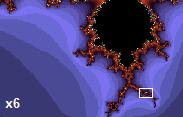
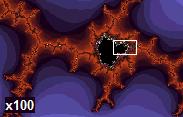
There are also fractals that can be simulated using computers and mathematical formulas, of which I have no understanding in even the most basic aspect.  The images they create, however are incredibly beautiful, with a strange almost ghostly implied symmetry as you change the scale (zoom in or out infinitely, theoretically).  The most famous, and iconic of these simulated fractals is the Mandelbrot Set, discovered and described by French-American mathematician, Benoit Mandelbrot (1924-2010).


Starting at the x1 magnification and increasing up to x2000, the patterns are self similar, the patterns are the same near or far!


Why do fractals matter?

While fractals were first described as early of the 17th Century, the first real practical use and description was provided by the previously mentioned Mandelbrot.  His usage?  Measuring the length of Great Britain’s coastline!  I know it seems like a piece of information we should have had for awhile, it was discussed in the 1967 paper by Mandelbrot titled “How Long Is the Coast of Britain? Statistical Self-Similarity and Fractional Dimension.”  

The main issue with measuring the coast line is what had been known as the coastline paradox.  This paradox explains that as you measure a coastline, the total length of the coastline increases without limit as the too used to measure the distance get’s smaller.  In English:  if you measured a coastline with a yard stick and then a stand 12-inch ruler, the ruler would return a LARGER length of coastline than the yard stick.

By using smaller and smaller measuring devices, you are able to measure finer and finer number of natural curves in the coastline itself.

Using a yardstick may result in this type of measurement:


Using the ruler may (not to scale, of course) result in something more like this:

What the exploitation of fractals allowed was a calculation of the dimensionality of the curving coastline, to calculate the actual length.  Again, much of this goes over my head, but from what I understand a coastline can be measured using any number between (or including) 1 or 2.  The West Coast of Britain, as an example has a calculated dimension of 1.25 (and that's a jagged coast).  While I couldn’t find if the measurement was ever made, the wonder of fractals made it a possibility.

Further reading and sources:
http://en.wikipedia.org/wiki/Fractal

http://en.wikipedia.org/wiki/How_Long_Is_the_Coast_of_Britain%3F_Statistical_Self-Similarity_and_Fractional_Dimension

http://www.glyphs.com/art/fractals/what_is.html

Pretty Picture of fractals:
http://www.enchgallery.com/fractals/fracthumbs.htm

http://sprott.physics.wisc.edu/fractals.htm


Farewell, Lonesome George and the La Pinta giant tortoise subspecies

Lonesome George, the last known survivor of the La Pinta giant tortoise subspecies, has died.  His kind is no more.  Extinct.  We've lent hand to the annihilation of another type of living being - giant Galapagos tortoises were often used as a reliable food source on ships, due to their ability to live without food or water for up to a year. 

First, we wiped out the females, because they were easier to catch due to the mating habits.  Slowly but surely, we wiped them out by 1906. 

Then, we got lucky - 66 years after the last giant tortoise was spotted, George was discovered (possibly again) by an invertebrate expert studying snails.  He smartly snapped a photo, and shortly thereafter, Lonesome George became the most famous reptile in the world.  The exhaustive search to find him a mate ensued and ultimately failed.  We were unable to correct the mistakes of our forefathers.  

Will we keep making those mistakes?  Conservation isn't a fad, or political opinion: it's vital for the survival of the human species.  This blue world is all we have.