Showing posts with label skepticism. Show all posts

Monday, June 25, 2012

For the love of fractals

Fractals are awesome.  Fractals are EVERYWHERE in your life - but what the eff IS a fractal?  I decided to consult the all-knowing Wikipedia and a fractal is defined as a

mathematical set that has a fractal dimension that usually exceeds its topological dimension[1] and may fall between the integers.[2] Fractals are typically self-similar patterns, where self-similar means they are "the same from near as from far"[3] Fractals may be exactly the same at every scale [or] they may be nearly the same at different scales.

That’s all fine and good, but what does that mean?  What does a fractal look like?  Why do fractals matter?

What does a fractal look like?

Imagine a tree.  Starting with the base of the trunk you have a thick stick coming out of the ground.  This ‘stick’ then splits into smaller branches - 

branches that look very very similar to the original ‘stick.’  From there, each smaller branch splits into even smaller, very similar branches and so forth to form the complete tree. This is a ‘natural’ fractal - one that appears in nature EVERYWHERE on earth.
You also have the example of river deltas and other flowing bodies for liquid, where each new path the liquid takes creates an nearly identical and to scale replica of the larger formation itself:


There are also fractals that can be simulated using computers and mathematical formulas, of which I have no understanding in even the most basic aspect.  The images they create, however are incredibly beautiful, with a strange almost ghostly implied symmetry as you change the scale (zoom in or out infinitely, theoretically).  The most famous, and iconic of these simulated fractals is the Mandelbrot Set, discovered and described by French-American mathematician, Benoit Mandelbrot (1924-2010).

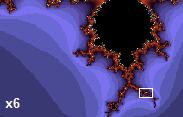
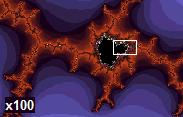

Starting at the x1 magnification and increasing up to x2000, the patterns are self similar, the patterns are the same near or far!


Why do fractals matter?

While fractals were first described as early of the 17th Century, the first real practical use and description was provided by the previously mentioned Mandelbrot.  His usage?  Measuring the length of Great Britain’s coastline!  I know it seems like a piece of information we should have had for awhile, it was discussed in the 1967 paper by Mandelbrot titled “How Long Is the Coast of Britain? Statistical Self-Similarity and Fractional Dimension.”  

The main issue with measuring the coast line is what had been known as the coastline paradox.  This paradox explains that as you measure a coastline, the total length of the coastline increases without limit as the too used to measure the distance get’s smaller.  In English:  if you measured a coastline with a yard stick and then a stand 12-inch ruler, the ruler would return a LARGER length of coastline than the yard stick.

By using smaller and smaller measuring devices, you are able to measure finer and finer number of natural curves in the coastline itself.

Using a yardstick may result in this type of measurement:


Using the ruler may (not to scale, of course) result in something more like this:

What the exploitation of fractals allowed was a calculation of the dimensionality of the curving coastline, to calculate the actual length.  Again, much of this goes over my head, but from what I understand a coastline can be measured using any number between (or including) 1 or 2.  The West Coast of Britain, as an example has a calculated dimension of 1.25 (and that's a jagged coast).  While I couldn’t find if the measurement was ever made, the wonder of fractals made it a possibility.

Further reading and sources:
http://en.wikipedia.org/wiki/Fractal

http://en.wikipedia.org/wiki/How_Long_Is_the_Coast_of_Britain%3F_Statistical_Self-Similarity_and_Fractional_Dimension

http://www.glyphs.com/art/fractals/what_is.html

Pretty Picture of fractals:
http://www.enchgallery.com/fractals/fracthumbs.htm

http://sprott.physics.wisc.edu/fractals.htm


Wednesday, June 13, 2012

Episodic Music: The Great Red Eye Part V

Earthshine


December 15, 2950 was officially declared Interplanetary Earthshine Day in remembrance of the first sight to inspire man to reach for the stars: the ever changing face of the moon.  Even when in it's finest crescent, the majestic surface cast in shadow is faintly set alight by the shine of the mother Earth herself.  This image emblazoned every spacecraft mankind built, and finally was placed upon the flag of the Interplanetary Alliance as a symbol of mankind's roots - and an inspiration to keep growing.


Sunday, April 29, 2012

Episodic Music: The Great Red Eye Part I


The Saganites of Hypatia and the Second Renaissance


One hundred and fifty years after the collapse of civilization following the cataclysmic conclusion of the Great War, humanity was slowly regaining it's footing, establishing simple agricultural villages across the scarred globe.  Some set up in the ruins left by those that had nearly annihilated themselves over invisible beings that never came to intervene.  Others took back to the caves and tree-house dwellings of ancient descendants, with no knowledge that they had, as a species, come full circle. 

In the final years of the first global society, a small sect of scientists, historians and philosophers realized that the writing was on the wall - if any of humanity survived the coming storm, there would be little left of all of the scientific, philosophic, artistic and historical progress laid down by millenia of men and woman that gave their entire lives to expose the elegant reality of nature and existence.  The loss of knowledge would loom larger than any previous purge in the history of mankind - even the destruction of the great Library of Alexandria and the savage murder of Hypatia.

The only remaining mote of past human knowledge would have been the plaques and discs included on the Pioneer and Voyager probes sent to the stars some three hundred years prior - an insightful move made by the 20th Century Astronomer Carl Sagan.  That hardly helped at all, as that information was now irretrievable by the whole of humanity.  Taking note from these examples of past blunders and foresight, the network of those concerned dubbed themselves the Saganites of Hypatia and set about a stunning and ambitious plan to save the knowledge and history of mankind from the impending implosion of what was left of society.

With groups working feverishly and in secret across the world, databases of knowledge, power supplies, simple pictograph instructions, books, hard drives, rod upon rod of quantum encoded diamond substrate were disseminated to the seven major world areas thought to be the places from which mankind would re-root itself should it survive: Central America, Persia, Central Africa, Southern Europe, Central South America, Mid-Southern China and India.  Using shadow corporations, bogus scientific research, stolen government grants for war research and unheard of embezzlement, the Saganites of Hypatia quickly and quietly built massive vaults in all seven locations, each containing the same information, in three of the most commonly spoken tongues of each region.

Fifty portable nuclear power supplies were included in each vault, maintaining the data, the vacuum seal on the vault and powering the minimal monitoring systems on the interior and exteriors of each vault.  The leading engineers of the time calibrated the systems of the vault so precisely that one of the portable power supplies would last up to one hundred years before exhausting its supply, automatically turning on the next generator in the sequence, to give the vault the best chance of being discovered by intelligence. 

Also included were supplies and instructions for quickly constructing efficient solar cells, wind and water turbines for generating small amounts of sustainable energy - along with detail pictograph, written and video instructions on how to manufacture each component of the electricity producing machines.
Pressure, light and sound sensors were placed all around the exteriors of each vault, tuned to as many of the specific frequencies associate with human mining activity.  Shift in light, sound and movement associated with tectonic and gravitational shifts were programed to be completely ignored by the vaults' security systems.  Once enough frequencies are gathered from local activity identified as human, the vaults' doors will activate special pressure sensors to determine when enough external debris and pressure has been removed for the vaults' automatic hydraulic doors, triggering a specific series of events:

First the doors' outer size panels (one on each side) exposing speakers designed to be heard clearly by the human ear through several meters of tightly packed earth.  The vaults' then play a prerecorded message in each of the three common languages three separate times - the message attempted to warn those approaching that the hydraulic doors would soon open on their own and that any human activity should be halted until the opening sequence was complete.  Once this message's third circuit was completed and the door started to slowly, silently creep open, another message played on a loop in each language, describing the purpose of the vaults:
In the year 2285, mankind sits on the brink of self imposed annihilation.  Ten thousand years of progress - art, history, literature, science, knowledge is on the brink of being lost forever.  Knowing this, The Saganites of Hypatia placed seven of these vaults across the surface of the Earth in hopes that they would be found by some distant survivors of humanity.  Myou use this knowledge better than we.  May you learn from our fatal mistakes.
And so, in the year 2440, a young Indian man digging a well in his modest village saw the dirt shift around him and then heard the strange disembodied voice from another time, from another world and the Second Renaissance had begun.


Friday, April 20, 2012

Are you Metal?


Metal.

For some, ideas of Jimmy Page and Led Zeppelin's accidental founding of the genre (since they reportedlyreviled the title) spring to mind, while other will think of Metallica's black album, maybe you like 80s Glam Metal (why?), or just anything you can bang your head to. Death Metal, Black Metal, power, thrash, gothic/doom metals all have a home in someones heart – but what can tie these things together?

Stuff that can is almost universally acknowledged as badass (well except the shittily aforementioned 'glam' metal). Death, doom – Led Zeppelin's mega-hit “Stairway to Heaven's” lyrics were mythically tied to Aleister Crowley's old house. That's some truly badass (if a bit kitsch, these days) stuff!

So I present the first of two photos which I will suggest, then DEMAND be labelled as not just “Metal,” but the best of all Metals - “Heavy Metal.” Admittedly, I have a massive advantage as both examples are volcanoes.

That is to say – cracks in the crust of the Earth, exposing stone that has been pushed and pulled by the massive forces beneath the ground that it is molten lava.


The first is a pretty standard view into a slightly active caldera – a sight that convinced some of our forefathers into believing that the very belly of hell and the master of evil could be the only reason for such a terrible stuff. Step back a few thousand years, and you are literally staring into the mouth of hell.

Pretty neat.

Confession time – this entire entry to this point is just filler. There is one reason I typed all of this nonsense: I had to post the following picture. It is the single most Metal image I have ever seen in my life, and it's 100% natural.

                               We could really use some epic meedley-meedley-meeeee guitar right about now...                        

No one playing a Jackson Flying V, here, just terrible terrible nature. This is the volcano in Iceland called Eyjafjallajökull, and what you are seeing is completely natural and completely badass. So what's going on?

Well, while things like stone and ash are electrically neutral, in this type of eruption you have a lot of heat and a lot of turbulence. From what I can understand all of the particles, and the entire cloud, start out neutral. With the heat and colliding particles causing ionization and differences in aerodynamics between the particles separating the positive and negative charges.  Once that difference is large enough, boom. Metal.


Thursday, April 19, 2012

Pretty Pictures with Words: If we create life?

More than one hundred years after it was first proposed, the Theory of Evolution still has it's detractors despite the nearly insurmountable amount of evidence in its favor.  If we start with the assumption that evolution is how we as a species came into being, and that this same force will take us to whatever is next - then what happens when we create life independent of biological evolution?


If Moore's Law holds up for the next decade or two and quantum computing becomes a practical reality in that time, some argue that creating true artificial intelligence will come almost hand-in-hand with these advancements.  This Technological Singularity would literally change everything it meant to be human.  Our creations would surpass our own intelligence, possible creating even more intelligent machines - manufacturing evolution.

Would our creations remember our forms?  Would they paint the whatever-unimaginable-substrate-they-use with whimsical representations of their moment of 'creation,' or would they instead embrace the fact that there was no sudden creation?  That they were the result of a slow process of improvements, baby-steps on the way to true intelligence?

Saturday, March 3, 2012

The words of Sagan via ZenPencils

It feels redundant to say "Carl Sagan had a way with words."  For so many in the skeptical, science and thinker communities his very name conjures chills of his steady voice, elegantly painting an objective picture of reality in a detail and beauty that religious text always struggle to provide.  He lived his life in the exact way he preached - like it's all we get.  No afterlife.  No reunions.  No eternal bliss or damnation.

What we get is what we have now - not what we might get based on the ruminations of ancient people in ancient times.

Zenpencil.com have put one of his most beautifully haunteing quotes to a perfect and simple visual:


If only we could get everyone behind this kind of message.