Fractals are awesome. Fractals are EVERYWHERE in your life - but what the eff IS a fractal? I decided to consult the all-knowing Wikipedia and a fractal is defined as a
mathematical set that has a fractal dimension that usually exceeds its topological dimension[1] and may fall between the integers.[2] Fractals are typically self-similar patterns, where self-similar means they are "the same from near as from far"[3] Fractals may be exactly the same at every scale [or] they may be nearly the same at different scales.
That’s all fine and good, but what does that mean? What does a fractal look like? Why do fractals matter?
What does a fractal look like?
Imagine a tree. Starting with the base of the trunk you have a thick stick coming out of the ground. This ‘stick’ then splits into smaller branches -
branches that look very very similar to the original ‘stick.’ From there, each smaller branch splits into even smaller, very similar branches and so forth to form the complete tree. This is a ‘natural’ fractal - one that appears in nature EVERYWHERE on earth.
You also have the example of river deltas and other flowing bodies for liquid, where each new path the liquid takes creates an nearly identical and to scale replica of the larger formation itself:
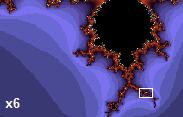
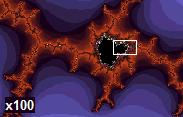
There are also fractals that can be simulated using computers and mathematical formulas, of which I have no understanding in even the most basic aspect. The images they create, however are incredibly beautiful, with a strange almost ghostly implied symmetry as you change the scale (zoom in or out infinitely, theoretically). The most famous, and iconic of these simulated fractals is the Mandelbrot Set, discovered and described by French-American mathematician, Benoit Mandelbrot (1924-2010).
Starting at the x1 magnification and increasing up to x2000, the patterns are self similar, the patterns are the same near or far!
Why do fractals matter?
While fractals were first described as early of the 17th Century, the first real practical use and description was provided by the previously mentioned Mandelbrot. His usage? Measuring the length of Great Britain’s coastline! I know it seems like a piece of information we should have had for awhile, it was discussed in the 1967 paper by Mandelbrot titled “How Long Is the Coast of Britain? Statistical Self-Similarity and Fractional Dimension.”
The main issue with measuring the coast line is what had been known as the coastline paradox. This paradox explains that as you measure a coastline, the total length of the coastline increases without limit as the too used to measure the distance get’s smaller. In English: if you measured a coastline with a yard stick and then a stand 12-inch ruler, the ruler would return a LARGER length of coastline than the yard stick.
By using smaller and smaller measuring devices, you are able to measure finer and finer number of natural curves in the coastline itself.
Using a yardstick may result in this type of measurement:
Using the ruler may (not to scale, of course) result in something more like this:
What the exploitation of fractals allowed was a calculation of the dimensionality of the curving coastline, to calculate the actual length. Again, much of this goes over my head, but from what I understand a coastline can be measured using any number between (or including) 1 or 2. The West Coast of Britain, as an example has a calculated dimension of 1.25 (and that's a jagged coast). While I couldn’t find if the measurement was ever made, the wonder of fractals made it a possibility.
Lonesome George, the last known survivor of the La Pinta giant tortoise subspecies, has died. His kind is no more. Extinct. We've lent hand to the annihilation of another type of living being - giant Galapagos tortoises were often used as a reliable food source on ships, due to their ability to live without food or water for up to a year.
First, we wiped out the females, because they were easier to catch due to the mating habits. Slowly but surely, we wiped them out by 1906.
Then, we got lucky - 66 years after the last giant tortoise was spotted, George was discovered (possibly again) by an invertebrate expert studying snails. He smartly snapped a photo, and shortly thereafter, Lonesome George became the most famous reptile in the world. The exhaustive search to find him a mate ensued and ultimately failed. We were unable to correct the mistakes of our forefathers.
Will we keep making those mistakes? Conservation isn't a fad, or political opinion: it's vital for the survival of the human species. This blue world is all we have.
My wife and I had to park about half a mile from the venue (Bridgestone Arena) itself, since all of these close parking was either sold out or over $10. The night was pleasant, in the high 80s (F) with low humidity (for Nashville) and a slight breeze from the Cumberland River. Entering the place was simple enough - they don’t give a sh*t about regular digital cameras anymore, so it was basically a look over to see if we had a bomb strapped on. I guess a rock show attended by a bunch of hippies - young and old - and performed by a pacifist wasn’t pegged as a ‘high security’ situation.
The obligatory flying pig
We decided to hit the merch table before finding our seats, and after about 20 minutes in line I was able to nab the last “Trust Us” camo tshirt in size large. The selection of merch was honestly disappointing. Roger’s ‘Dark Side’ tour had some fantastic and original shirts, like the one with Roger from the 70s, but The Wall merch mostly seemed rehashed shirt designs with the 2012 update and “Roger Waters” everywhere “Pink Floyd” had been. Let’s be honest - who goes to Roger Waters for the merch?
Finally winding our way upstairs and grabbing a soda, we started the sojourn around the outer track of the building to get to our seats in section 333 (top tier in the VERY back of the arena). As we rounded a ‘corner’ a well dressed gentleman stopped us and said he worked for the arena, and that they were trying to get rid of some lower-level tickets, much closer to the stage. He then handed us two tickets to section 107, stage left.
The mighty Wall!
The seats were ‘limited view,’ but we only missed the flower sex, and given the very nature of the live show The Wall, it wasn’t a big deal in the slightest. Free seat upgrade.
This is how close we were
Win.
The show did not start promptly at 8pm, despite the clear indication printed on the ticket - not that this was unexpected. There was no opening act, no encore. For nearly three hours, there was only The Wall.
As the lights dimmed the announcer warned us to turn the flash function in our cameras off - the flash of light would wash out the projections on the MASSIVE white ‘brick’ wall that served as both projector screen and visual centerpiece. A lone spotlight appears on the stage, and the ending to the movie “Spartacus” begins playing over the speakers, as two officials carry the ‘Pink’ puppet on on the stage to say “I am Spartacus” before being dropped to the ground. A lone trumpet plays the lonely melody from “Outside the Wall” in the darkness before the audience is caught off-guard by the sudden first chords of “In the Flesh?” Balls of fire and spark shoot from the base of the The Wall portion of the stage followed by that old codger himself, strolling out all badass like. We did our hammer salutes and mad screaming as he patrolled to each side of the stage, his enjoyment clear on his face. He might be getting older but compared to when he first performed these shows in the early 80s, he is at the top of his game and loving every second of it. All of the pyrotechnics were used in the first song of the evening, including an airplane that flew over our heads to crash behind the Wall in a fireball, and the rest of the show focussed on the gorgeous visuals Roger and Co. projected onto Mr. Screen and the Wall itself. If there wasn’t action being projected on the bricks, then a stone-brick texture was projected, making the otherwise whitewashed wall far more realistic and menacing.
“The Thin Ice” gave us our first taste of our ‘not David Gilmour’ of the evening, Mr. Robbie Wyckoff. While I was expecting the worst after enduring the awful job that Doyle Bramhall II did in the 2000 tour, “In the Flesh,” Wyckoff didn’t sound like a dying basset hound. He was competent, if a bit unassuming - but this IS Roger’s show. The ‘screen’ that as the Wall itself as well as Mr. Screen began to show us the name, birth and death of people killed in the name of some authority, starting with Roger’s father and including people like the Persian ‘angel,’ Neda Agha-Soltan.
The Schoolmaster
The trio of Another Brick 1, Happiest Days and Another Brick 2 were pretty damn true to the source material. Dave Kilminster’s performance of Gilmour’s ABITW2 solo was spot-on. Add in a little Snowy White goodness at the end and you have one worked up crowd. For the children’s chorus, a group of Nashville’s school-aged kids got on stage and performed a simple rhythmic dance while singing and gesturing to the Schoolmaster puppet that had descended on our side of the stage.
Between “Another Brick in the Wall Part 2” and “Mother,” something of a new song was played. The best way I can describe it is to call it “Another Folk in the Wall.” It had the same hook as the other three “Brick” songs, but was acoustic and had a funkier rhythm. It broke up the proceedings nicely, and helped to keep the audience on its toes. From here, Roger broke with the 1980s script and talked with the audience a bit, mainly about Brazilian Jean Charles de Menezes who was shot eight times by London authorities, because they erroneously ‘suspected’ him of terrorism.
While the show has always had some anti-authoritarian themes, they were nothing like what was on display tonight. Roger pulled no punches, and it felt damn good to see someone do this - be unapologetically bleeding heart. No excuses: every rocket launched is a theft from someone that is in need (to terribly paraphrase Ike).
“Mother” was straightforward with two notable exceptions; a black and white (not gray-scale, true black and white) projection of Roger performing the same song back in 1980 at Earls Court and after Roger sings “Mother should I trust the government?” three words appeared in bold red on the Wall in rhythm with the song: “NO FUCKING WAY.” The synch of the projection with the performance was remarkable. This is one polished show.
While one of my favorite songs on the album and sequences in the movie, “Goodbye Blue Skies” was a fantastic rendition - but something felt missing without the terror that the song invoked in the movie. That said, the harmonies were crisp and the visuals (bombers dropping symbols like the dollar sign, the star of David, the cross, the logo for Shell gasoline and many others).
By the time “Empty Spaces/What Shall We Do Now” started, we could no longer see Mr. Screen at all, as it had become completely obstructed by the continual construction of the Wall itself. We were treated, however, to the new ‘root’ animation to go with the flowers. The roots writhed and pulsed as the music and flowers danced until the climax which saw the portion from the movie being projected on the Wall. “What Shall We Do Now” was probably the second most ‘pumped’ song of the evening for me, since I hear it so rarely. The only song that ‘rocked’ harder for my money was “Run Like Hell,” but more on that later.
I tried to get a nipple shot, but this was the best I could do, bell button and camel toe;)
T&A was the order of the day for “Young Lust,” as it should and there were many a pair of young breasts and smooth bellies projected across the Wall as the band rocked out and the stage crew slowly enclosed the band in their stage-tomb. I can’t be sure, but I thought I may have caught Wyckoff doing some scat vocals ala’ Gilmour during the Young Lust solo (he was not playing guitar, however), but I can’t be certain.
For “One of my Turns” and “Don’t Leave Me Now,” Roger was in front of the Wall, while his band backed him up from behind the Wall. He roamed the stage while singing the former and sat dejected for the latter. As always, the projections on the Wall were incredible, but this is the slowest part of the show so nothing really stuck with me.
The beginning of Another Brick Part 3
“Another Brick in the Wall Part 3” took the projections to a level last seen on LOST when the ‘others’ are seen brainwashing people with a strange, jumbled movie. It’s something you really just have to see for yourself.
“Last Few Bricks” was fairly uneventful, as the extra medley through the set so far gave the stagehands time to finish constructing all but on brick of the Wall. Finally, we see Roger in a lone beam of light shining through the last crack in the Wall. “Goodbye Cruel World.” The last brick is placed and the Wall’s construction is complete.
The completed Wall during "Hey You"
After a pleasantly punctual intermission (25 minutes on the nose), the melancholy beauty of “Hey You” filled the arena. The songs presentation was plain. No fancy lights or fire and no projections aside from the static “stone-brick” texture. There is also no visible band. The entire band is performing, unseen, behind a thirty foot tall ‘brick’ wall. The concept is so simple when you read it, but ‘seeing’ it in action is absolutely surreal. No mistake about it, Roger’s “Wall” concert concept is completely brilliant. The man makes you cheer to what is, for all intents and purposes, as singing brick wall.
"Is There Anybody Out There"
Two bricks were then removed stage left for “Is There Anybody Out There” to reveal two guitarists (Dave and Snowy, I believe) on nylon-strung classical guitars for the gorgeous tune.
"One of my Turns"
As the song ended, a drawbridge type panel began to lower itself from a section of the Wall on stage right. The panel lowered until it was perpendicular to the Wall and had a tidy living room set-up - a chair, lamp and LCD TV. His performance from his ‘living room’ is projected on the stage left side of the wall, in crisp color and detail. The projection gave us an awesome look at just how animate Roger is these days - often miming lines like “all down the front of my favorite satin shirt. The Pink Floyd song written in a night during The Wall recording sections still sounds like an original, intended piece and is all the more gorgeous for it.
The Wall projection for "One of my Turns"
"Comfortably Numb"
“Vera” and “Bring the Boys Back Home” were incredibly moving - the former featured video of families (especially children) welcoming home their parents from their tours of duty, often streaming tears. The latter of the two displayed the entire Dwight Eisenhower quote I referenced above, juxtaposed with video and pictures of children in poor conditions, tastefully.
I won’t be very surprised if “Comfortably Numb” was on top of the audiences list of best performances, and for once, Roger pulled it off without Gilmour. Dave’s solo was INCREDIBLY faithful and Wyckoff delivered quite well also, though nobody can sing the part quite like Gilmour does. Both were positioned at the TOP of the complete 30 foot wall, with spotlights shining from behind them, casting their shadows across the audience.
Wyckoff's shadow
Roger was fantastic as well - and nobody can sing his portion of that song as well as he does. A few bars into the second and final solo, Roger ‘pounds’ a spot on the Wall, which triggers a GORGEOUS shattering animation from the point of contact across the entire Wall. The gray mass of brick and gloom exploded temporarily into a bright cascade of primary colors mimicking a sunset.
The shattering
As the solo nears its end, several trap doors on the stage in front of the Wall open and elevators appear carrying guitars, a drum set and a keyboard set-up, all for the “surrogate band” to use for the remainder of the show. Unfortunately, I didn’t see any of the old-school masks.
A full, two verse version of “The Show Must Go On” brought us screaming back into the more militant “In the Flesh.” Roger marched to the mic with his black leather trench coat and aviators and began the reprise full of gusto. As a finale for the song, following “I’d have all of you shot,”
Roger, having all of us shot
Roger pulls a tommy-gun from his jacket and begins ‘shooting’ the audience. While the ‘gun’ he was ‘shooting’ only had a blue LED light in the tip, on the Wall projection, his exact image was doing the same thing, only this time bullets and shell casings were flying about madly. While the video of Roger was very well synched with the live act, it did appear to be pre-recorded and amazingly choreographed for the live experience.
“Are there any paranoids in the audience tonight?” Roger teases darkly from behind his sunglasses. That’s how faithful this show was to the original run, in terms of musical direction. Well done Mr. Gilmour. “Run Like Hell” was a very energetic performance for the crowd - there were hands rhythm clapping and fists pumping. As the song ends, Roger gets the crowd worked up by ‘thanking’ them quite loudly, sending us into another cheering frenzy. As “Waiting for the Worms” began, the tension in the air was growing thick - that Wall had to come down soon.
“Stop” sees the brief return of the ‘Pink’ puppet, as he is seen sitting atop the Wall before plummeting to the floor for climax of “The Trial.” As the first orchestra begins this next to last song, the ‘Surrogate Band’ set up sink beneath the front stage again, and the animations from the movie are projected to go along with Roger’s lone performance. After being sure to sing “go on judge, shit on him,” Roger soon disappears from the stage and the loud speakers and audience begin deafeningly chanting “TEAR DOWN THE WALL! TEAR DOWN THE WALL!”
Then, as if it were the Biblical Jerhico, the Wall began tumbling and crashing to the ground, falling just short of the front row (a yard from their feet, maybe).
As the ‘rubble’ cleared, the entire band (including Roger’s son, Harry and the incredible Jon Carin) appeared on stage, with Roger holding a trumpet and others holding various guitars, banjos and such. The delicate “Outside the Wall” finally swooned us away after an amazing night of music.
The band took its bows and Roger gave us his deepest thanks, and the night was over. As we left the arena, I saw people in tears. I understand that feeling: I was born WAY too late to have been able to see the original shows, so this was a big deal in terms of my musical consumption. Since 1996 (when i discovered Floyd in HS) I had been dying to see The Wall live - it was so worth the wait!
The Great Pendulum was originally commissioned by the United Authority of the Earth, Luna and Europa in the year 2935 as a means to test 'scooping' gas out of the Terrible Titan Jupiter to fuel long term space voyages. Using the Jovian gravity to pull the pendulum down and out of it's grasp would save energy and ensure better monitoring capabilities from the Lagrangian pivot point set impossible far away - but physically tethered to the Pendulum itself.
By 2940, exploits in quantum gravity discoveries helped to lead, laterally, to the discovery of the dark energy drive - allowing enclosed vehicles to bypass the speed of light by riding the wave of expanding space, pulling and pushing them to their interstellar destinations at a mind bending pace. The Great Pendulum was now going to be a one-off, exploration mission. It didn't take long for the main Pendulum to be re-engineered from the 'ground' up to include one pilot. Man was going to visit Jupiter's Great Red Eye in person in 2953.
The main cockpit, officially called the Science Module, was set 100 meters from the front of the vessel, with layers of water shielding and a nuclear centrifuge (to power the G-Suppressor, which was designed to divert some of the g-forces away from the pilot) and 100 meters of precisely cut CarbonCompress to allow for clear, crisp view through the front and rear should any exterior cameras fail.
As the great lattice pressure cage encloses the Science Module, Cosmonaut Shem Aglig completes his third and final round of system checks before the countdown to release commences, and he becomes to second man to ever breach the Jovian atmosphere.
December 15, 2950 was officially declared Interplanetary Earthshine Day in remembrance of the first sight to inspire man to reach for the stars: the ever changing face of the moon. Even when in it's finest crescent, the majestic surface cast in shadow is faintly set alight by the shine of the mother Earth herself. This image emblazoned every spacecraft mankind built, and finally was placed upon the flag of the Interplanetary Alliance as a symbol of mankind's roots - and an inspiration to keep growing.
In the year 2900, mankind had reached the beyond the orbits of Neptune and Pluto on their slow march to the stars. The Second Great Space age of man was coming to a close and massive shipyards were being completed on the skirts of the planetary solar system preparing for man's imminent exit to the unknown. Finally, mankind was ready to set sail on the cosmic ocean.
Not a day passed, however, that didn't see every man, woman and child look towards the Sun, straining to catch a glimpse of a mote of dust, caught in some mighty beam of light. Hoping to see that pale blue dot, one more time.
Image is of Earth, from the Pluto orbit, called "the pale blue dot." Carl Sagan penned an essay by the same name, which is used in this piece of music. Please learn more about Mr. Sagan's work and make a donation to the Planetary Society today!
After
the loss of Devin Langshire in 2653 the human race waited and tested
for another ten years before trying to launch another man into orbit.
This time, the entire event went off perfectly and Captain Bashir
Alvarez became the first man in nearly half a millennia to
successfully orbit the Earth, before splashing down safely in the
Indian Ocean.
Alvarez
and his development team based in Australia then proposed and began
leading the effort to return man to the moon – and not just for a
visit. Mankind knew, thanks to the vast amounts of history stored in
the Vaults, that we had visited the moon several times in the past
and had countless legends about our nighttime companion. Entire
religious mythologies, pseudo-science arenas and even popular
entertainment in the form of movies and rock music in the 20th
Century all dedicated themselves to Luna, our mistress.
The
initial set of proposals were ambitious: establish a permanent, self
sustaining base on the moon by 2690 with a rotating population. Each
Vault agreed to take a set of problems from the goal and solve them
independently, if possible. Food, fuel, water, radiation shielding,
shelter, habitat design/construction, and the logistics of how to get
it all to
the moon in the first place. In 2672 the initial equipment launches
began when the first non-test flight of the Roman I freight rocket.
Transporting heavy digging equipment from the familiar-looking lunar
backhoe to the exotic of the newly engineered Lunar Tunneling Drill.
The
Tunneling Drill (often called Touchdown by the design engineers due
to the abbreviation of “TD” used in shorthand notes) was half of
the main habitat building module specifically designed to allow for
quick excavation with minimal human input. Weighing in at 15 tons,
the drill will sit face down on the surface of the moon and, after
being secured with the scaffolding to be place by human hands, will
begin it's journey below the ancient surface. Each turn of the drill
itself brings the regolith and other debris up a corkscrew conveyor
which leads to the top exterior of the alpha base tent, spraying it
in a radial pattern around the tent to create a slight bunker around
the base itself. Once the TD has reached a depth of 3 meters, the
gyroscopes mechanically shift and the drill begins turning into it's
horizontal position, using vacuum suction, air pressure and a series
of track gears to push the drill forward.
If
the Touchdown drill was to accomplish its mission, it relied on the
much more complex and impressive Regolith Automatic Metallic
Arranger, named in honor of the first Vault discovered in India. The
RAMA machine was designed to follow directly behind TD, using scraps
of metal from earth and the geology of the moon to seal the drilled
tunnel using a plasma heat generator and the most powerful, perfectly
balanced pressure pistons ever created by man. RAMA helped to ensure
stronger radiation resistance, a seal from the toxic cosmic vacuum
and a support structure for the habitation tunnels themselves.
2690
arrived just as the drill began it's horizontal journey, the last and
longest of the drilling process. The human colony that had been
living in temporary quarters in the Alpha Base tent (except in the
case of emergency solar flares, at which point the tunnel was flooded
with breathable air and the machines placed in standby mode) finally
made the permanent move underground in 2694, as “Touchdown” and
RAMA were finally powered down.
In
2760, the declining health of Sir Bashir Alvarez forced him to leave
his home planet. The time he had spent in space and on the moon had
done enough damage that his nearly 130 year old body could no longer
thrive in the gravity of Earth. In 2783, at the age of 150, Bashir
Alvarez became the first person entombed on the moon.
Before
his death, Alvarez helped lay the groundwork for a grid of buried
power cables linking the Earth side to the Far side of the moon, onto
which kilometers of solar arrays were placed, allowing for use of
non-essential energy consumption during the long lunar nights
(including more aggressive farming), when all the colonists could see
was the Earth. Construction on the grid was rumored to have inspired
the anonymous Hymn, “Earthrise,” which quickly became the
unofficial anthem of the lunar colony. The Translunar Power (or
'Bashir') grid was turned on with few hiccups in 2790, creating man's
first permanent home in space.
Europa,
icy tomb
While
construction and scientific research continued and blossomed on the
Moon at the beginning of the 28th
Century, the earth-based authorities began focussing on the question
that started the entire space-race: are we alone? The Alvarez
Foundation in Australia were given the resources and authority to
continue the Luna project and the remaining resources trained their
crosshairs onto Europa. In 2710, the Europan lander the Santa Maria
landed and began it's melt through the icy surface.
The
lander's main platform anchored itself to the thick ice surrounding
it and dropped a pill shaped piece of metal the size of an industrial
refrigerator, attached with an impossible thin cable to the lander
itself. Glowing red, the metal pill slowly began its descent through
the frozen surface of this alien world. All seven Houston Controls
were inundated either gathering or analyzing new data being sent
continuously via a complex relay of solar system satellite way
stations. For nearly a week the hot pill slowly melted downwards,
giving up no signs of life or ocean.
Shortly
after one week had passed since the melting began, the data
drastically shifted as the probe's external temperature dropped
without warning. As the scientists back on Earth held their breath,
the hot pill cracked open, and a tiny automated submarine (to which
the thin cable was actually attached) emerged, slowly coming to life.
Cheers of jubilation erupted in control rooms across the world as
the predictions made centuries ago proved true – Europa was a water
world.
Early
picture transmissions from the Santa Maria were featureless black,
leading engineers to fear that either the cameras or the lights had
malfunctioned, even though the spec readings of the probe itself were
all optimal. The tiny submarine robot began it's dive towards the
bottom, dispensing more of the thin cable from inside its shell to
maintain direct connection with the surface. Three hours after being
born into the frigid Europan Ocean, the submarine component of the
Santa Maria changed the human perspective forever – a wisp of
debris rushed into the light of the camera which had been working the
entire time. The realization that there was simply nothing to
reflect the light initially gave way to relieved sighs, until the
cause of the debris swam past the submarine, never taking notice.
Europa
was a world of life.
Twenty
four hours after man's first glimpse of alien life, the Santa Maria
finally discovered the first volcanic vent - the hypothesized source
of energy for all Europan lifeforms - and the view was both
spectacular, and stunningly familiar. Worm-like plants heaved and
gyrated in the volcanic heat, as tiny shrimp-like creatures flurried
about eating something invisible to the eyes of the camera. As the
view of the Euroshrimp became clearer, their physical appearance was
disturbing: while their shell was transparent like many deep sea
creatures on Earth, the top half of the crustacean was shaped like
that of a man with no face: two arms on a rectangular torso, topped
by a neck and 'head' which had no eyes, and only an mouth at it's
top. The thing had 'hands' with four main fingers and two rows of
thumbs on each hand.
Small
samples of the surrounding water were tested and confirmed that these
life forms were carbon based. Within 36 hours, the first strand of
DNA of isolated and the world was turned on it's head: this life may
have been from a similar 'seed' as life on earth. That, or life
simply has fewer paths than had previously been assumed.
In
2770, the first of the modified and updated TD and RAMA equipment
landed on Europa, near the Santa Maria, and began the slow work on
creating a livable environment for mankind to lay down roots outside
of the Earth system for the first time. Additional probes were sent
(after the Santa Maria discovered life) to analyze the natural
resources and found trenches of metal from impacts that had yet to be
swallowed by the icy world. A predictable amount of trace metal in
the ice itself was also discovered, becoming more concentrated in
deeper cuts of ice. Using the lessons learned from the moon and the
more abundant resources on Europa first human settlement on the moon
of Jupiter was officially founded in 2800.
The
first humans to settle began immediately studying the biological
aspects of this new world. After the first 90 days of scientific
preparation, an average of 300 alien species a day were being
cataloged. The amount of data gained was going to take the greatest
minds on Earth decades to digest and analyze – and the scientists
making the discoveries were beyond celebrity – they were the
paragons of the age.
When
lead biologist Shari Cho took ill six months after arriving, no one
gave it a second thought. Per protocol, she was quarantined to her
personal quarters and lab, where she continued her work seamlessly.
Her symptoms grew progressively worse over the next week by which
time half a dozen other members of the colony had been quarantined
for wildly different symptoms.
As
the illness spread quickly through the settlement, the scientists on
Europa, Earth and Luna all worked feverishly on the data to discover
what was causing all of these varied sicknesses. In all of their
hubris and joy over finding life on the hostile Europa, mankind had
overlooked the most important lesson: life was opportunistic.
Shorty
after mankind arrived, an otherwise benign alien bacteria found its
way into the living and work areas of the colony. After infecting
its first human, the bacteria quickly began multiplying in the new,
much friendlier environment. Each new generation grew more
aggressive, slowly destroying its host – but each time the
infection spread, it destroyed its host differently, but always at
the same pace. Fifteen days after her first symptoms appeared, Shari
Cho died in a fit of screaming psychosis, exclaiming that she was
burning away.
Once
the video images of her gruesome death leaked to the settlement at
large, and then to Earth, panic ensued. Demands were made to send
emergency help from Luna to Europa with medical aid. Each day
brought more death to the settlement. Petty Officer Daniel Rogby was
elected to represent the ailing and dying Europan population, as he
had yet to develop any symptoms and was thought to have some natural
immunity. The devastation was that much more complete when Rogby
died mid-sentence while trying to finalize a deal with the command on
Luna to send emergency aid.
On
February 9, 2801 the Earth and Luna command issued their final stance
on the issue: no aid would be sent to Europa. By the summer of 2801,
Europa was nothing more to humanity than icy tomb.
Titan,
methane seas
Odyssey
I, II and III science probes were launched in three successive months
in the year 2775 bound for Ganymede, Iapetus and Titan, respectively.
With the massive success of the Luna colony and the promise of the
colony on Europa the exploration of the other massive satellites
began in earnest with the Odyssey program. Each probe was outfitted
with complete science laboratory, as well as deployable all terrain
automated vehicles to explore more than the immediate landing zone.
Soil and rock sampling kits and hardware like drill bits helped to
ascertain the composition of the moons.
The
first mining operations were set up on Ganymede and Iapetus to gather
a ranger of silicate rock and minerals in 2780. Often, the materials
were launched off planet to orbital processing facilities designed to
refine and ship the materials to the rotating lagrangian space
station near Titan, established during the initial stages of the
resource gathering.
Odyssey III's mission to Titan had hoped to find life, but was met
with the chemical precursors of life seemingly stuck due to the
inability of the chemicals to dissolve into liquid methane. There
was, however, more slow burning fuel than another other visited body
in the solar system – and an atmosphere thicker than the Earth's.
Plan to colonize the bizarre world began in 2795 with plans to launch
the first TD and RAMA machines at the end of 2801. Full human
occupation of the icy world was set to begin in 2807, but was
postponed indefinitely after the world witnessed the slow demise of
every member of the Europan colony early in the year.
Finally,
in the year 2812 the new Automatic Tunneling Metallic Arranger, which
was more a compact, faster and more powerful tool that acted as a
combination of both the TD and RAMA devices used on the Moon and
Europa, was launched towards the distant world of Titan. Exactly
three months after the launch of ATMA, the Abraham science lab was
launched from the the new Houston base on the moon. The Abraham
itself was designed to gather samples of local minerals, gasses and
quasi-organic material and expose it to several types of human
biological material, cataloging all responses.
~----~
By
the middle of 2816, the first human crew to travel to Europa was
being assembled despite some pleas from the public to abandon the
project. Replaying the footage from the Europan catastrophe and
audio of Devin Langshire's fateful mission next to images of the
Titan Cruiser waiting in orbit around the moon. The public outcry
was outstanding, despite the many assurances from the Houston
collective that there were absolutely zero potential infectious
agents that have been detected in the Titan atmosphere or soil.
The
date set for departure of the Titan Cruiser (itself a fully operative
living module that will land permanently on the surface of the moon)
approached with the public outrage building to a fever pitch.
Leaders were pictured as sadistic and the cosmonaut crew were framed
as ignorant lambs being lead to slaughter. Worse, the idea that the
cosmonauts could bring back some mankind ending disease spread
through society like a spark to a dry tender box. When June 15, 2817
finally arrived after months of sometimes violent, the crew boarded
the craft and awaited command from Earth to ignite their engines and
set sail.
For
six hours, the crew of thirty men and thirty women, sat restlessly
listening to the authorities bicker back and forth about public
opinion and budget wastage. Finally, three hours before the launch
window was to close, the call came to the Titan Cruiser's crew,
“Titan Cruiser 00-1A-38, this is mission control, Luna,” the
voice crackled through the cabin of the bridge. “Commence vehicle
shutdown and depressurization – you're not going anywhere.” For
a full minute, all sixty men and women that had trained and prepared
for years for this moment sat in stunned silence. They would likely
never see Titan.
“Titan
Cruiser 00-1A-38, please confirm orders and comply,” the growingly
impatient voice on the other end of the radio tether called out
again. Bridge Commander Daphne Colbert stood from her seat at the
helm of the ship and turned to the crew without word. She scanned
the faces she had trained with in complete isolation for over a year
– these were her family and she was their leader. “We have been
ordered to abandon our mission. To not explore. To not push
forward,” she started brokenly to her crew. She breathed deep and
steadied herself as the crew looked to her for direction.
“As
I see it,” Commander Colbert said with a steely gaze coming over
her eyes, “we have been ordered to disobey.” The crew erupted in
a jubilant cheers as the radio buzzed back to life - “Commander
Colbert – why have you not responded? We are sending a boarding
party in case your communications system isn't working properly, even
though all systems read normal. I don't know wh-” the voice
stopped suddenly. “COMMANDER COLBERT, I ORDER YOU TO CEASE YOUR
ACTION IMMEDIATELY!” a stronger voice barked across the radio as
the ship began it's launch maneuvers. “This will be seen as
treason, Daphne!” the voice continued.
“Commander?”
first engineer nervously asked the expressionless woman, trying to
read her thoughts. “Set course for Titan,” she responded evenly.
~----~
In
the year 2825, relations between the rogue colony of Titan and the
Earth system had resumed and started to level off. The Titanians had
technically stolen the Titan Cruiser against orders and had landed on
the surface of the Saturnian moon without the support from Luna or
Earth – but they had thrived.
The
thick atmosphere of Titan enabled humans to walk outside without the
need for pressure suits. Combined with the low gravity, the colonist
quickly realized with 'wings' strapped to their arms (and a fair
amount of practice) the thick air allowed them to 'swim' into the air
and fly without the aid of engines or additional aircraft. When
regular trade and relations resumed in 2830, the Titanians had
already developed a series of basic human flight equipment, self
sustaining subterranean hydroponic farming and flight bikes used for
traveling long distances at altitude with minimal energy input.
Incoming
engineering students from the Earth system streamed in with ideas and
designs for structures impossible on Earth. Floating platforms,
giant steps, precariously positioned pillars and other mind bending
structures quickly covered the 100 square miles the colony had come
to cover by 2840 after the surge of immigration. The New Olympic
games officially opened in 2844 and saw human from the Earth, Luna,
Titan and the Iapetus and Ganymede mining operations come together in
the name of sport for the first time in over five hundred years.
 branches that look very very similar to the original ‘stick.’ From there, each smaller branch splits into even smaller, very similar branches and so forth to form the complete tree. This is a ‘natural’ fractal - one that appears in nature EVERYWHERE on earth.